
Royal Palace of King Parakramabahu
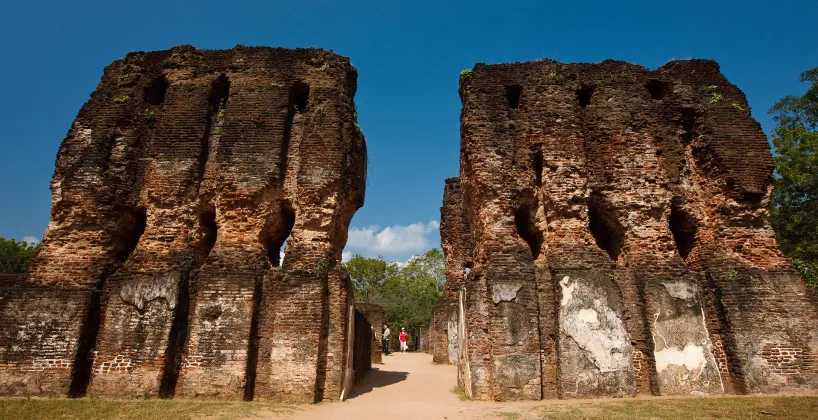
Rising amid the ancient ruins of Polonnaruwa, the Royal Palace of King Parakramabahu stands as a testament to royal power and architectural mastery. Built in the 12th century, this grand complex once symbolized the vision and authority of one of Sri Lanka’s greatest rulers in the historic capital city.
Polonnaruwa
Imagine stepping back in time to an era of grandeur and innovation. In the heart of Sri Lanka lies Polonnaruwa, an ancient city that feels like an open-air museum, where every stone and statue tells a story of kings, monks, and a thriving civilization.
Start your exploration at the majestic Royal Palace, its towering ruins hinting at the
opulence of a bygone kingdom. Walk through its grand halls, and you can almost hear the echoes of royal ceremonies and bustling courtyards. Just steps away lies the Audience Hall, where intricately carved stone elephants line the walls, each one unique, showcasing the artisans’ mastery.
Vatadage
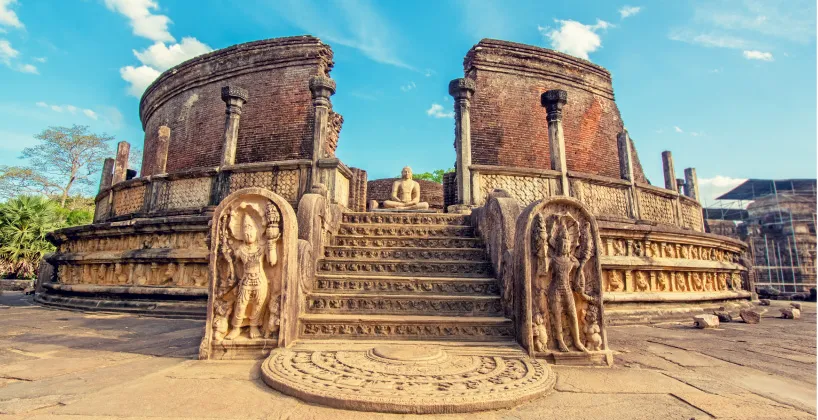
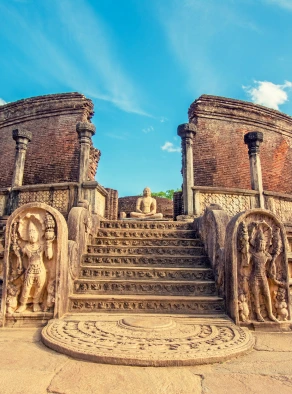
Vatadage, located in the ancient city of Polonnaruwa, is a stunning example of Sri Lanka’s rich architectural and cultural heritage. This circular, multi-tiered structure is believed to have been built in the 12th century and was likely used as a relic chamber to house sacred Buddhist relics. Its intricate design and historical significance make it one of the most iconic landmarks in Sri Lanka.
Gal Viharaya
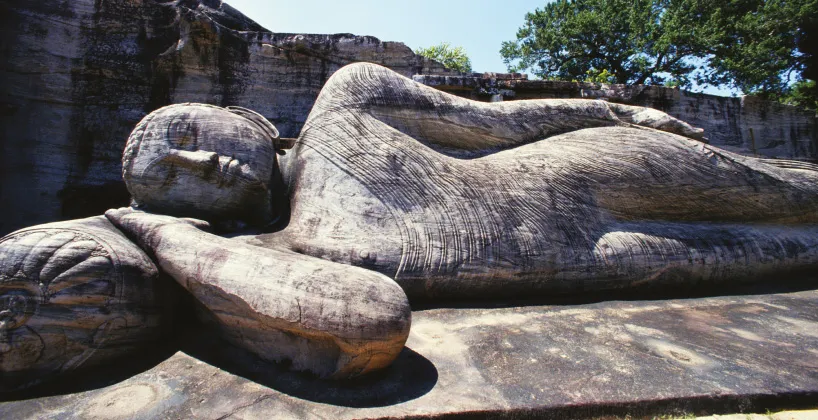
Gal Viharaya, located in Polonnaruwa, stands as a magnificent testament to Sri Lanka’s rich Buddhist heritage. This ancient rock temple, dating back to the 12th century, is one of the most significant and awe-inspiring historical sites on the island. Carved into the rock face, Gal Viharaya is renowned for its stunning collection of Buddha statues, each one showcasing extraordinary craftsmanship and spiritual significance.
The temple complex features four main Buddha statues in different postures sitting, standing, and reclining each carved from granite. The Reclining Buddha, at 14 meters long, is particularly impressive and exudes an aura of tranquility. The serene expressions on the statues and the intricate detailing make it a remarkable place of reflection and reverence.
Nissanka Latha Mandapaya
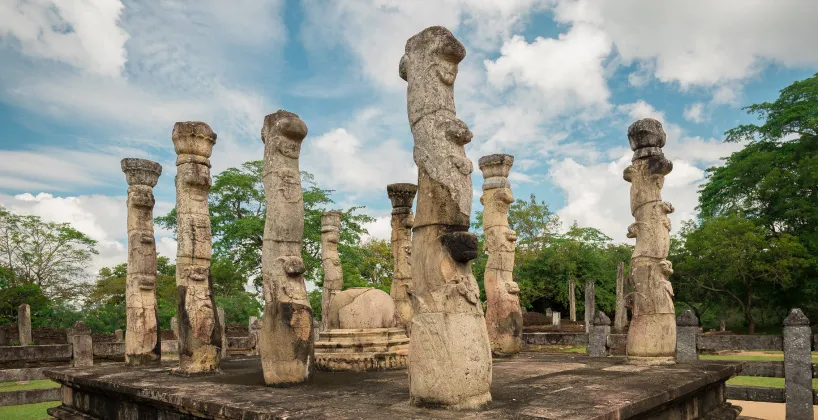
In the ancient city of Polonnaruwa lies Nissanka Latha Mandapaya, a masterpiece of Sinhalese craftsmanship that stands as a testament to a king’s devotion. Built by King Nissanka Malla in the 12th century, this open-air pavilion is believed to have housed sacred rituals and chants of the Buddhist scriptures.
The first thing that catches your eye are the exquisitely carved stone pillars, each designed to resemble a lotus stalk. Imagine running your fingers along their delicate curves, marveling at the artistry that transformed hard stone into graceful blooms.